

What Is
THOR-50?
A High-Performance Next-Generation Dummy Essential for Meeting the Latest, Strict Safety Standards
The THOR-50 2023 specification, including the alternative rib assembly, meets the evaluation test requirements of NHTSA / VRTC.
For many years, the Hybrid III dummy has been used as the international standard in automotive frontal impact testing.
In recent years, requirements for vehicle safety performance have become increasingly demanding worldwide, creating a need for more human-like injury assessment data. The THOR series was developed in response to these needs.
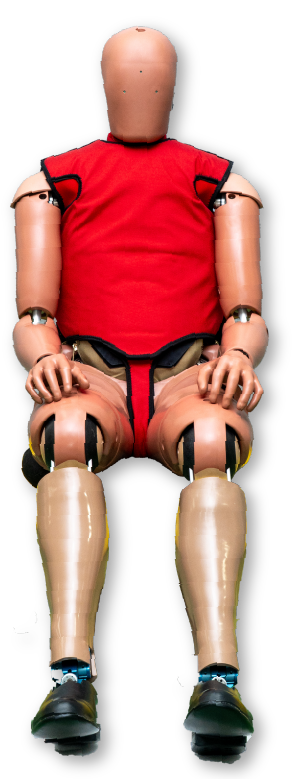

Technical Features of THOR-50
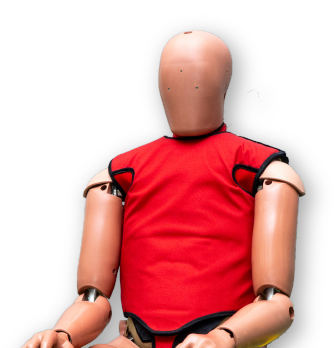

More Faithful Reproduction of the Human Skeleton and Body Movement
Compared with conventional dummies, THOR-50 reproduces the movement of joints such as the neck, shoulders, thorax, ribs, and pelvis much more closely to the human body. This is referred to as high biofidelity. For example, THOR-50 can realistically reproduce complex human body behavior, including twisting and tilting, during an oblique frontal impact.
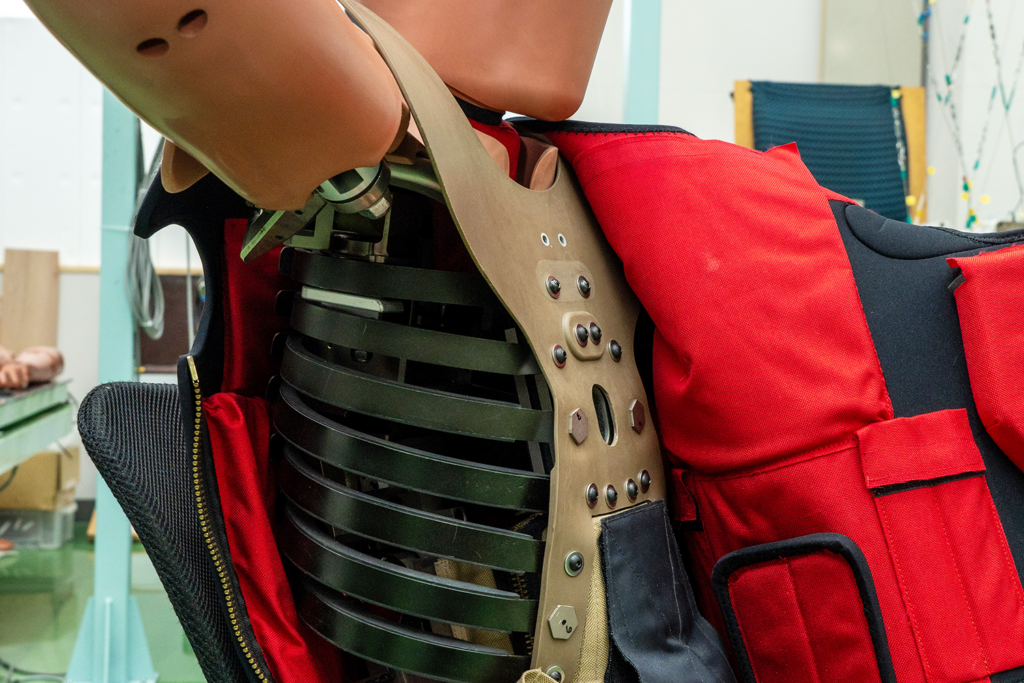
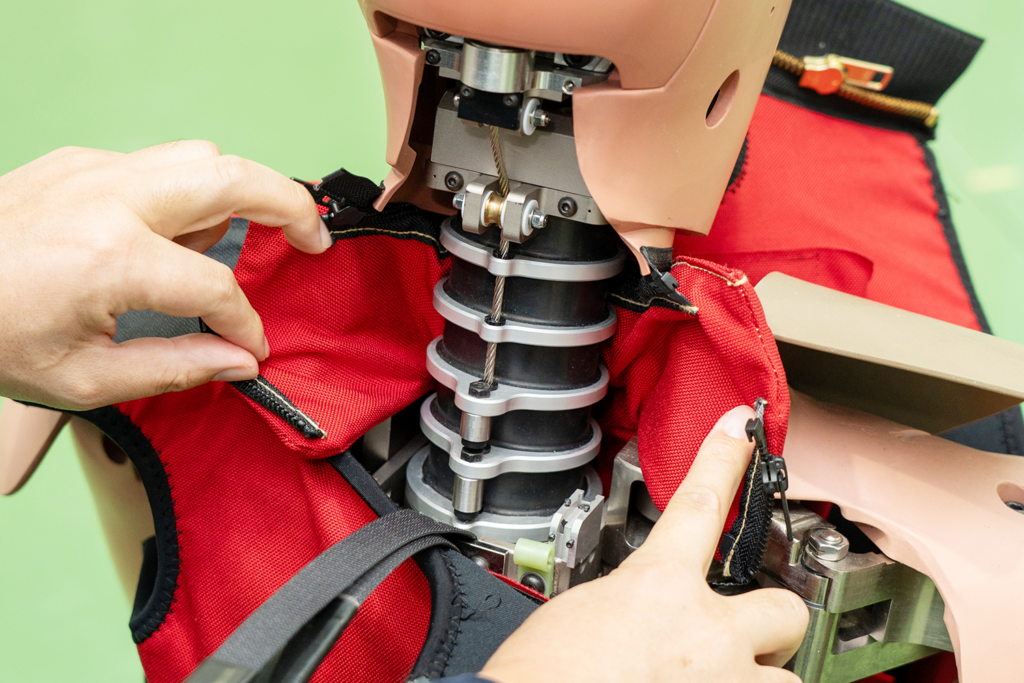

A Remarkably Higher Number of Sensors
This is one of the greatest features of THOR-50. Compared with older dummy models, the number of sensors and measurement channels that can be installed has increased dramatically.In particular, because thoracic rib deformation can be measured three-dimensionally at multiple points, it is possible to evaluate in greater detail how much load is applied to internal organs and ribs.

Compatible with the Latest Safety Standards, Including MPDB Testing
THOR-50 is officially adopted in the MPDB, or Mobile Progressive Deformable Barrier, frontal impact test, which is being introduced in Europe, Japan, and other regions.
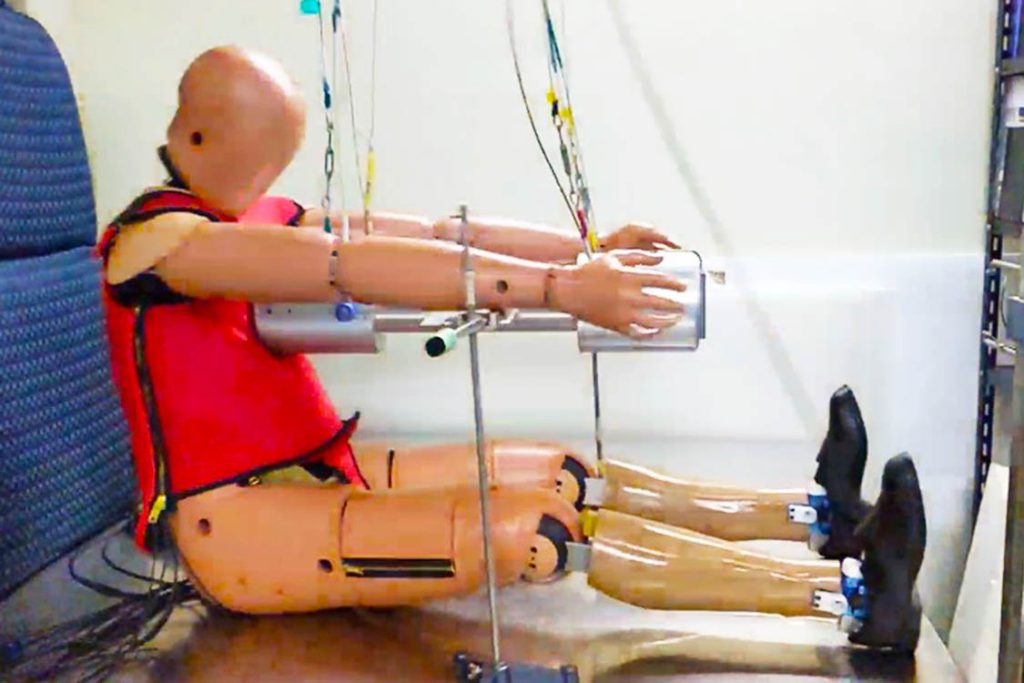

Comparison with Conventional Models
| THOR-50 (Next-Generation Model) | Hybrid-III 50th Male (Conventional Model) | |
|---|---|---|
| Main assumed crash tests | MPDB tests, including NHTSA-related evaluations; offset frontal impact tests | Full-lap frontal impact tests; conventional offset impact tests |
| Number of measurement channels / expandability | 100 to more than 140 channels, depending on configuration | Approx. 50 to 80 channels |
| Thoracic rib structure and displacement measurement | Seven ribs with displacement measurement. Representative sensors include SPIRAL Track, IR-TRACC, and S-Track. | Six steel ribs with single-point displacement measurement in the fore-aft direction only |
| Range of motion of the neck and shoulder joints | Flexible multidirectional range of motion close to that of the human body, reproducing clavicle and scapula movement | Mainly fore-aft motion, with a relatively rigid shoulder structure |
| Abdomen, pelvis, and lower extremities | 3D abdominal displacement measurement, iliac and acetabular load measurement, and complex ankle mechanisms | Simplified inserts and limited load measurement |
Test Benefits Provided by These Differences
- THOR-50 supports the latest offset and oblique frontal impact tests, including MPDB testing, and enables more accurate evaluation of human body behavior under complex impact loading.
- The greatly increased number of sensors and measurement channels enables detailed injury risk assessment in areas such as the thorax and abdomen, which were difficult to evaluate with conventional dummies.
- The newly designed rib structure enables three-dimensional and highly accurate measurement of thoracic twisting and deformation behavior that occurs during oblique impacts.
- THOR-50 reproduces seat belt slip-off, occupant tilting, and rotational behavior during impact in a more human-like manner.
- It also enables more detailed evaluation of impact loads and injury risks to the lower extremities, including the legs and pelvis, during pedal or dashboard intrusion.
JASTI’s Strengths
JASTI provides integrated support from introduction to operation through flexible domestic manufacturing capabilities, a quality system that includes calibration testing, and rapid support.
Short Lead Times and Flexible Customization through Domestic Manufacturing
With more than 30 years of development and manufacturing experience in Japan, JASTI can respond with short lead times. We also flexibly support specification changes and customization according to test conditions and applications, enabling us to provide products optimized for on-site requirements.
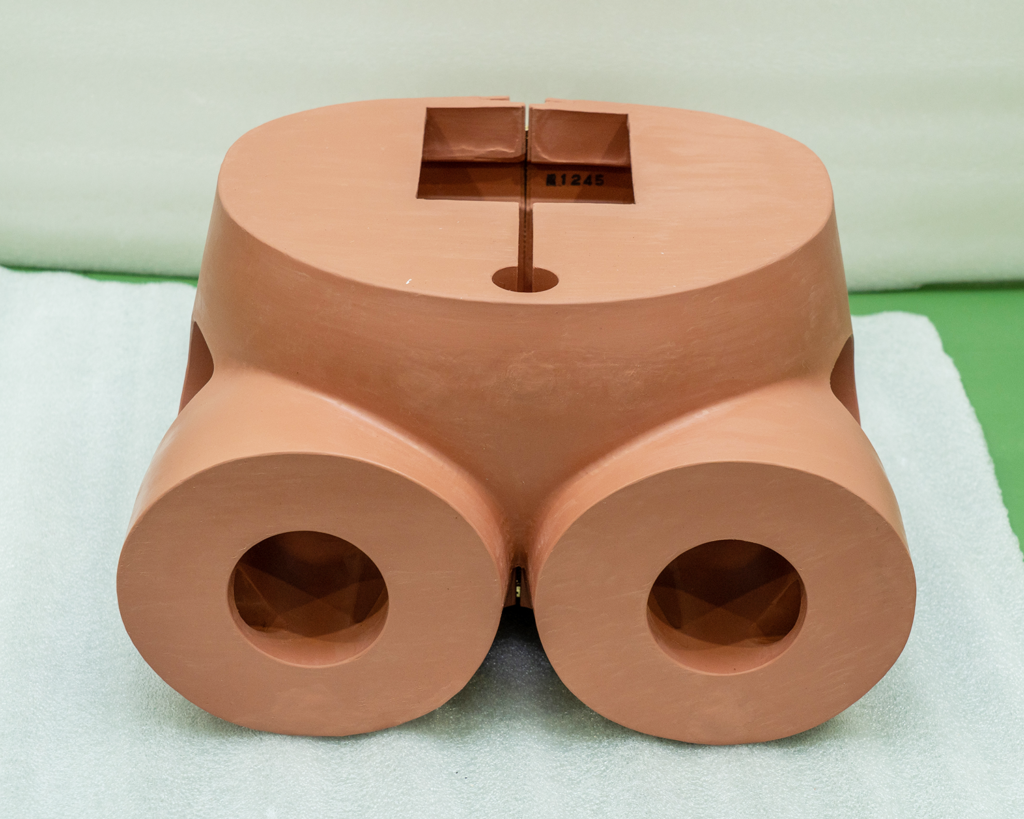
Calibration Testing Services for Other Manufacturers’ Products
JASTI accepts calibration testing not only for its own products, but also for products manufactured by other companies. Under a testing and calibration framework based on ISO/IEC 17025, JASTI ensures measurement accuracy and reliability while supporting the continuous maintenance of testing quality.
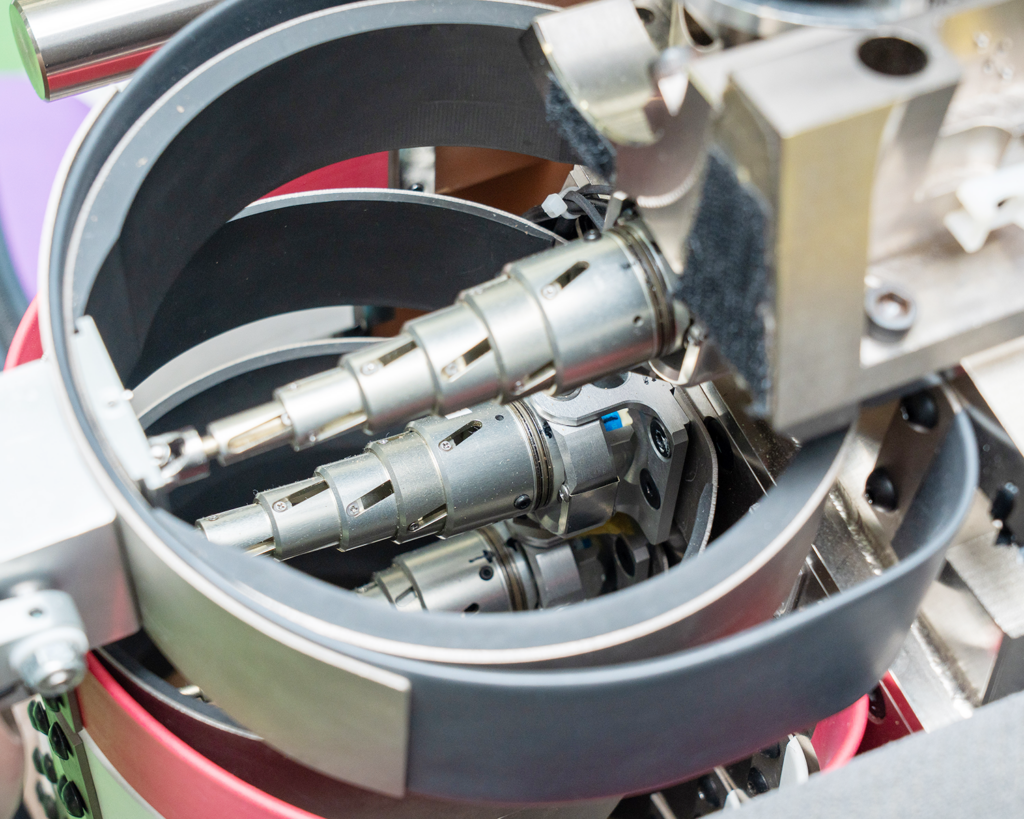
Rapid Repair and Maintenance System
In the event of trouble, JASTI can respond quickly through its domestic locations in Japan.
By performing repair and maintenance promptly, we help minimize the risk of test downtime and support stable operation.
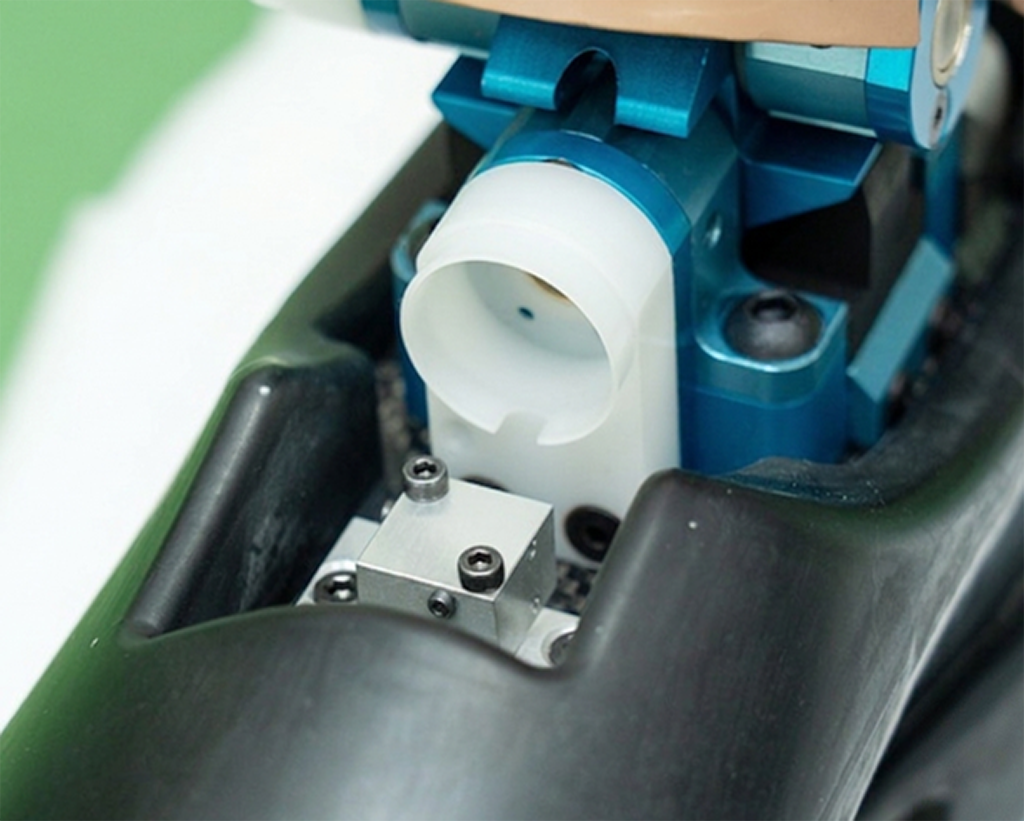
Applicable Standards
Options and Customization
Note: Please contact us for details.